Most people brush every day. Still, many end up with cavities, bleeding gums, or bad breath. The cause is often small habits done the wrong way, not a lack of effort. This guide shares simple oral health tips that you can follow at home. It also explains when to see a dentist, so small problems do not grow into painful and costly ones.
Have tooth pain or bleeding gums right now? Do not wait for it to get worse. Book a checkup at Janasriram Multispeciality Dental Clinic in Tirunelveli. Call +91 86101 28921 or visit us
| At a Glance Brush: Twice a day for two minutes with fluoride toothpaste, once in the morning and once before bed. Floss: Once a day to clean between teeth, where a brush cannot reach. Visit your dentist: Every six months for a checkup and cleaning, or sooner if you have pain, bleeding gums, or swelling. |
Why Good Oral Health Matters Beyond a Nice Smile
Your mouth is the entry point to your body. Plaque, the sticky film on your teeth, holds bacteria. If it stays, it causes cavities and irritates your gums. Over time, gum disease can damage the bone that holds your teeth in place. Studies have also linked gum disease with problems such as diabetes and heart disease. Healthy teeth also help you chew well, speak clearly, and smile with confidence. The oral health tips below are simple, and most take only a few minutes a day.
Daily Oral Health Tips for Brushing and Flossing
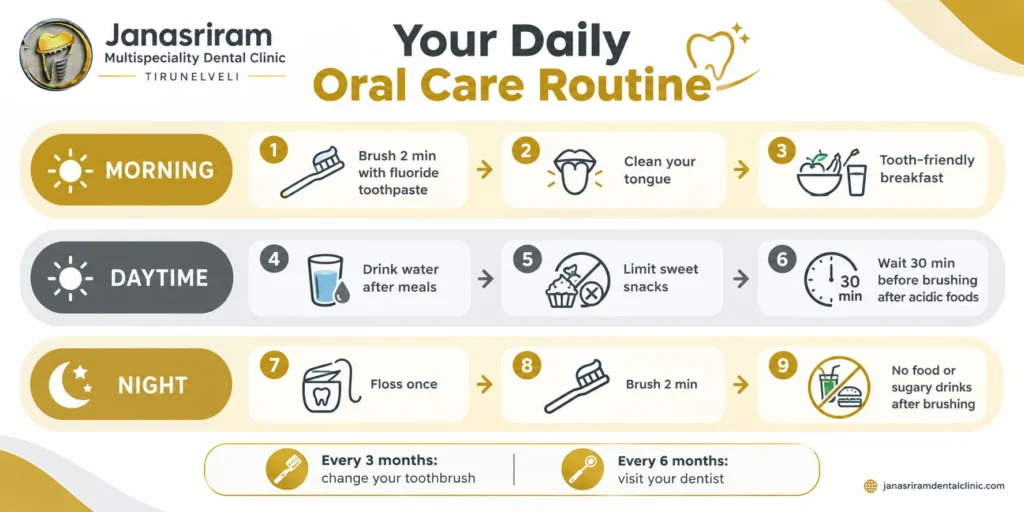
Good brushing and flossing are the base of every dental routine. Here is a quick checklist:
- Brush twice a day for two minutes. Do it in the morning and before bed.
- Use fluoride toothpaste. Fluoride makes enamel stronger and helps prevent cavities.
- Choose a soft brush. Use gentle, small circular strokes. Hard scrubbing wears enamel and hurts gums.
- Angle the brush toward the gumline. Plaque collects where the tooth meets the gum.
- Clean your tongue. This removes bacteria that cause bad breath.
- Floss once a day. A brush cannot reach between teeth, where food and plaque hide.
- Change your toothbrush every three months. Replace it sooner if the bristles spread out.
Follow these oral health tips every day, and you lower your risk of cavities and gum disease. A short routine done well beats a long routine done in a hurry.
Did You Know? Tooth enamel is the hardest substance in the human body. Even so, it cannot grow back once it is lost, so protecting it every day matters.
What You Eat and Drink Shapes Your Teeth
Every time you eat sugar, bacteria in your mouth make acid. That acid weakens enamel and leads to cavities. Frequent snacking keeps this cycle going all day. Diet is one of the most overlooked oral health tips, so keep these points in mind:
- Limit sweets, sticky snacks, and sugary drinks, especially between meals.
- Drink water after meals to rinse away food particles.
- Eat crunchy fruits and vegetables, plus dairy foods that supply calcium.
- After acidic foods or drinks, wait about 30 minutes before brushing.
- Avoid tobacco in every form, including chewing tobacco and paan with tobacco. It harms gums and raises the risk of oral cancer.
Not sure your brushing method is right? Ask the dental team at Janasriram Multispeciality Dental Clinic to check it during your next visit. [Internal link: dental checkup page]
Tooth-Friendly vs Tooth-Harming Choices in Everyday Meals
What you eat and how often you eat it both matter. Here is a quick guide for common foods at home.
| Category | Tooth-friendly choices | Tooth-harming choices | Why it matters |
| Drinks | Plain water, unsweetened buttermilk, tender coconut water | Sugary soft drinks, packaged fruit juices, sweetened sharbat | Sugary drinks feed the bacteria that make acid and weaken enamel |
| Tea and coffee | Tea or coffee with little or no sugar | Very sweet tea or coffee, sipped many times a day | Frequent sipping keeps teeth in contact with sugar for longer |
| Snacks | Sundal, roasted peanuts, guava, cucumber, carrot | Biscuits, chips, sticky toffees, candies | Sticky and sugary snacks cling to teeth and are hard to wash away |
| Sweets | A small portion of a sweet right after a meal | Jilebi, laddu, halwa, and Mysore pak eaten between meals | Sweets eaten between meals give teeth more sugar exposure through the day |
| Dairy | Curd, milk (unsweetened), paneer | Sweetened milk drinks and flavoured milkshakes with added sugar | Plain dairy provides calcium, while added sugar cancels the benefit |
| Main meals | Idli, dosa, vegetable sambar, ragi dishes, fresh vegetables | Frequent fried and sugary snacks around meals | Balanced meals are better for teeth than constant grazing |
| Habits | Chewing crunchy fruits and vegetables | Gutka, chewing tobacco, paan with tobacco | Tobacco harms gums and raises the risk of oral cancer |
How Often Should You Visit the Dentist?
Most dentists suggest a checkup and cleaning every six months. People with gum disease, diabetes, braces, or frequent cavities may need to visit more often. Early cavities and gum problems usually cause no pain, so a checkup can find them before they become serious. Professional scaling also removes tartar, the hard deposit that brushing cannot remove. Regular dental visits are one of the most effective oral health tips for avoiding costly treatment later.
Related Services
- Root Canal Treatment: Complete Guide
- Teeth Alignment Treatment in Tirunelveli: Complete Guide for Patients
Warning Signs You Should Not Ignore
Home care works well for prevention. But it cannot treat a problem that has already started. See a dentist if you notice any of these signs:
- Gums that bleed when you brush or floss
- Bad breath that does not go away
- Tooth pain or sharp sensitivity to hot and cold
- Swollen, red, or receding gums
- A loose tooth
- A mouth ulcer that lasts more than two weeks
- White or red patches inside the mouth
Even the best oral health tips cannot replace a proper exam when these signs appear. Early treatment is usually simpler, shorter, and less expensive.
Oral Health Tips for Children and Older Adults
Different ages have different needs.
Children: Start brushing as soon as the first tooth appears. Use a rice-grain smear of fluoride toothpaste for children under three, and a pea-sized amount from ages three to six. Help your child brush until they can do it well alone. Avoid putting a child to bed with a sweet drink in a bottle.
Older adults: Dry mouth is common, often as a side effect of medicines, and it raises cavity risk. Sip water often and tell your dentist about it. If you wear dentures, clean them daily and take them out at night. Book a visit if they feel loose or cause sores.
Frequently Asked Questions
What are the best oral health tips for healthy teeth?
The best habits for healthy teeth are brushing twice a day with fluoride toothpaste, flossing daily, limiting sugar, avoiding tobacco, and seeing a dentist every six months.
How often should I brush my teeth?
Brush twice a day, for two minutes each time. Do it once in the morning and once before bed.
Is mouthwash necessary?
No, mouthwash is optional. It cannot replace brushing and flossing. Ask your dentist before using one daily, as some types are not suitable for everyone.
When is a toothache an emergency?
A toothache is an emergency when it comes with facial swelling, fever, or pain that does not stop. Bleeding that will not stop and a knocked-out tooth also need urgent care. See a dentist the same day.
Book Your Dental Checkup
Start these oral health tips today, and add a regular dental checkup to your routine. If you want a professional opinion on your teeth and gums, book a visit with Janasriram Multispeciality Dental Clinic. Call +91 86101 28921 to book your appointment in Tirunelveli.
Clinic: Janasriram Multispeciality Dental Clinic
Website: https://janasriramdentalclinic.com/
Phone: +91 86101 28921
Location: Tirunelveli